


Andrea Egan’s victory in the Unison general secretary election is being read, almost universally, as a blow to Sir Keir Starmer. That reading is not wrong, but it is incomplete. The deeper story is not just about Labour losing a reliable ally, but about Unison exposing its own fragility at precisely the moment it needs authority most.
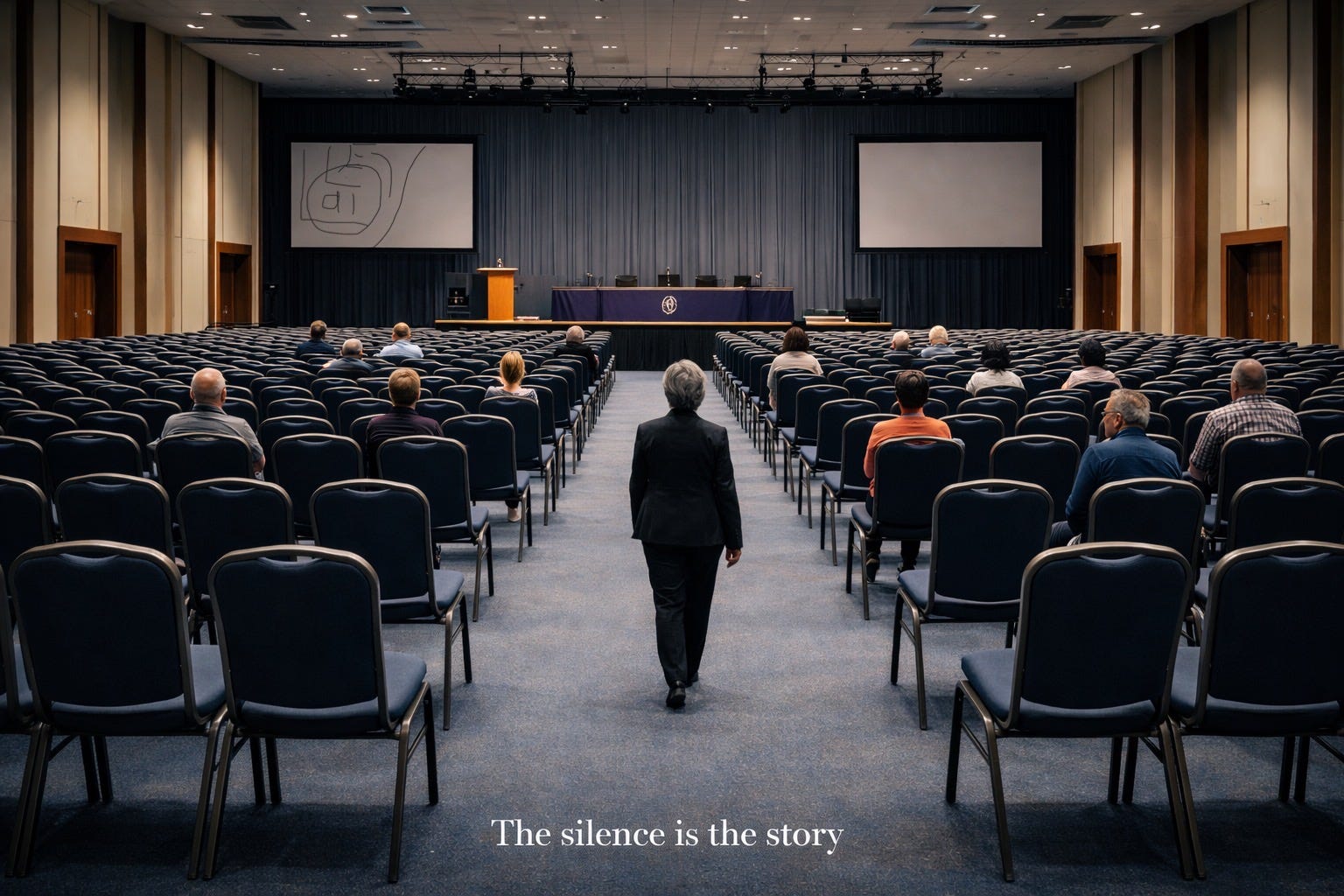
This was a clear victory under the rules. It was decisive in percentage terms. And yet it arrived on a turnout of barely seven percent. That figure should not be treated as an incidental footnote. It is the most important number in this story.
A leader elected by such a narrow slice of the membership does not inherit a mobilised movement. She inherits an organisation where disengagement has already set in, quietly, structurally, and at scale.
That matters because unions do not survive on symbolism. They survive on consent, participation, and, ultimately, on members continuing to pay their subscriptions because they believe the organisation speaks for them.
Nowhere is this tension clearer than in the West Midlands.
The workforce Unison actually represents
Unison in the West Midlands is not a hotbed of ideological militancy. Its membership is concentrated in local government, the NHS, education support, social care, housing, and outsourced public services. It is a workforce that is overwhelmingly service-based, often female, often older, and frequently exhausted.
This is not a workforce that strikes lightly or radicalises quickly. Historically, it has been cautious, procedural, and loyal, particularly to Labour-run institutions. When conflict emerges, it is usually defensive rather than revolutionary, driven by pay restraint, workload, pensions, or service collapse rather than factional politics.
That context matters, because it tells us something uncomfortable. Andrea Egan’s election was not powered by a mass surge of ideological enthusiasm in places like Birmingham, Sandwell, Wolverhampton, or Dudley. Most members simply did not vote.
Silence, however, should not be mistaken for assent.
Non-voting as an early warning signal
In large membership organisations, disengagement follows a familiar pattern. Members stop attending meetings. Then they stop voting. Then, quietly and individually, they begin to ask whether their subscription still represents value.
Non-voting is not apathy. It is an early warning signal.
For Unison members in the West Midlands, subscriptions come out of modest pay packets already stretched by inflation, workload, and staffing shortages. If the union appears absorbed in Westminster politics, Labour factionalism, or symbolic confrontation rather than workplace outcomes, the risk is not rebellion but attrition.
That is the real fragility this election has exposed.
Birmingham and the problem of centralisation
Birmingham City Council sits at the heart of this story, not because it is unique, but because it is emblematic. Among staff, and often privately among councillors, there is a widespread perception that the council is not fully in control of its own destiny. Decisions feel shaped as much by national Labour priorities as by local realities.
For the workforce, that creates a corrosive dynamic. Pay restraint, restructures, and service reductions are experienced not as locally owned choices but as instructions passed down a chain that ends somewhere else.
This is not an anti-Labour argument. It is an anti-centralisation one.
And it presents Unison with both a danger and an opportunity.
The danger of mirroring Labour’s mistake
Here lies the central risk for the new general secretary.
If Unison responds to Labour’s centralisation by centralising itself, by framing its authority around national confrontation rather than local representation, it will reproduce the very alienation it claims to oppose.
A union that mirrors Labour’s centralisation problem will inherit Labour’s legitimacy crisis.
That is not a rhetorical flourish. It is an organisational truth.
West Midlands members do not need a union that performs politics on their behalf. They need one that understands their council, their trust, their service, and their pressures, and is prepared to confront decisions made far from the consequences.
Leadership after victory
Andrea Egan has won. That fact should not be minimised. But leadership now is not about victory speeches or ideological alignment. It is about re-legitimising the organisation among the 93 percent who did not participate.
That means resisting the temptation to treat disengagement as disloyalty. It means recognising it as a failure of connection.
In the West Midlands, that requires a stability-first approach. Members here are not looking for permanent warfare with Labour. They are looking for competence, protection, and a union willing to say, clearly, that local workforces will not be managed as an afterthought of London politics.
Challenging Labour without performing hostility
There is space, and need, for Unison to challenge Labour. But that challenge must be precise, grounded, and member-led.
Criticism that focuses on council mismanagement, unrealistic funding settlements, social care failures, or workforce planning will resonate. Broad ideological hostility will not.
The difference matters. One builds trust. The other accelerates disengagement.
Disaffiliation, in this context, should not be wielded as a threat or a slogan. It should be framed, if at all, as a question rooted in outcomes. What does affiliation deliver for members in Birmingham, Coventry, Wolverhampton, or Solihull? Where does it work, and where does it fail?
Anything else risks turning a constitutional debate into a proxy war disconnected from lived experience.
A moment of choice
This election has created a moment of choice for Unison.
It can become a national protest vehicle, loud, confrontational, and increasingly distant from a cautious, service-based membership. Or it can become something more dangerous to Labour in the long run: a locally grounded, regionally assertive union that exposes the cost of centralised decision-making on real workers’ lives.
In the West Midlands, that choice will be decisive.
Because if Unison cannot demonstrate relevance here, among a workforce that desperately needs stability rather than symbolism, then the real legacy of this election will not be a blow to Starmer. It will be a slow erosion of the union’s own authority.
And that is a crisis no victory speech can fix.