


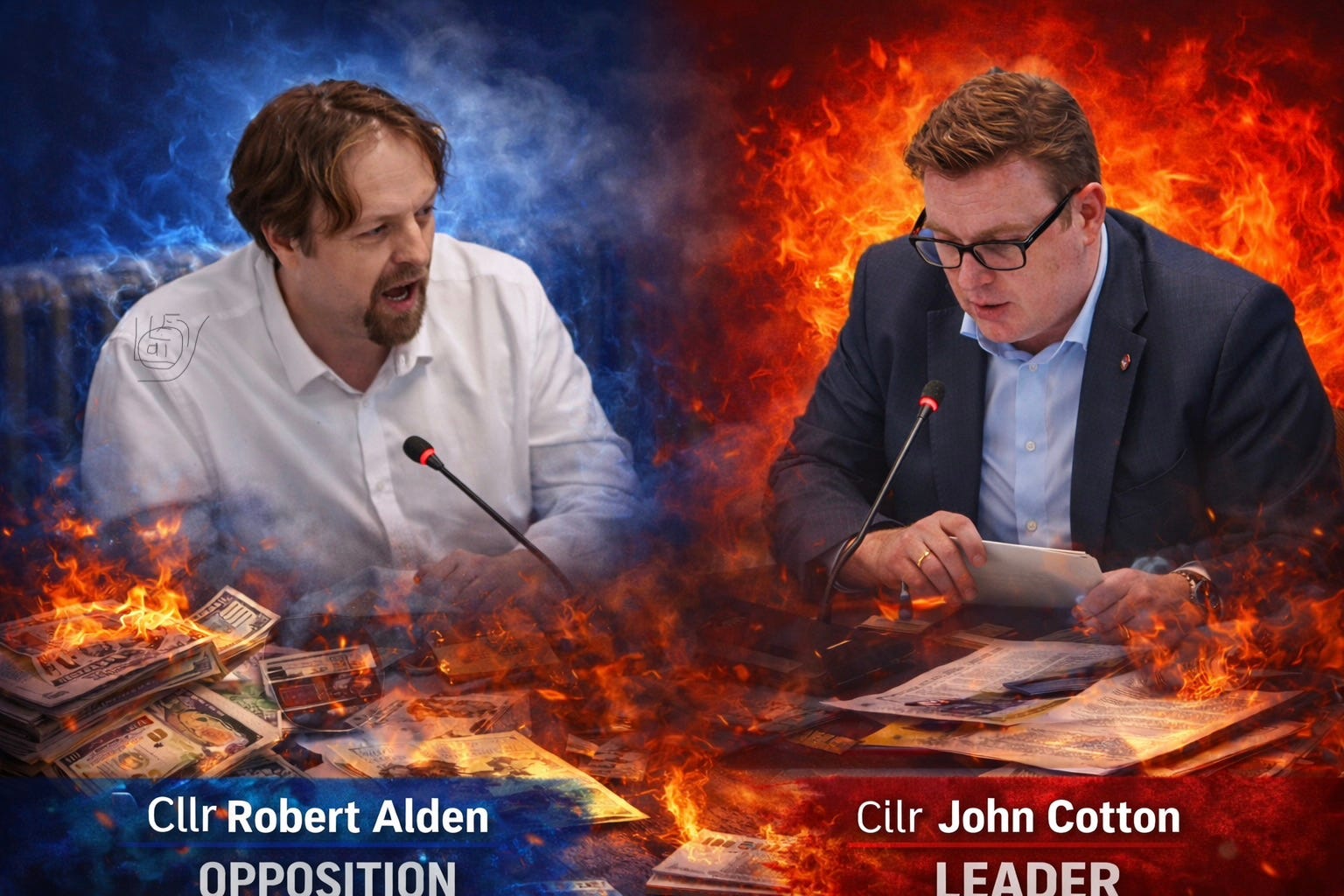
Birmingham City Council’s Cabinet meeting on 10 February 2026 had a clear purpose: to present and sell the 2026–27 budget. This was the moment the council wanted to show that the long financial crisis is over, that the city is solvent again, and that the worst days are now behind it.
The meeting was chaired by John Cotton, Labour Leader of the Council, who handled proceedings with his usual calm and courtesy. Cotton looked genuinely pleased, and that was understandable. After years of emergency measures, national headlines, and financial humiliation, being able to present a budget without the word “bankrupt” hanging over it clearly mattered.
This was not triumphalism. It was relief. A council quietly congratulating itself for getting back to solid ground.
That tone ran through the Cabinet contributions. There was optimism, reassurance, and a heavy emphasis on progress. The message was consistent: Birmingham has turned a corner, stability has returned, and the future now looks brighter.
The difficulty is that a budget presentation is not the same thing as daily life in the city. While the language was upbeat, the experience of many residents remains far less convincing.
Among the Cabinet voices was Karen McCarthy, Labour councillor and Cabinet Member, who delivered a smooth and professional contribution. Her remark that “none of us came into politics to make these decisions” landed as intended, sympathetic, careful, and human.
But making decisions, especially difficult ones, is precisely the job of those in charge. And while the speeches were well crafted, there was a sense that presentation was doing more work than delivery.
The rhetoric was polished. The confidence was warm. But scratch the surface and many of the city’s underlying problems remain stubbornly in place.
That tension was picked up, in a more restrained way, by Sir Albert Bore, councillor, former Labour Leader of the Council, and now Chair of Scrutiny.
Bore’s style remains characteristically academic and careful. He does not grandstand, and he does not overstate his case. But listening closely to his remarks, the concerns were clear enough. Savings delivery, he said, has been poor. Scrutiny is not valued as it should be. Too many decisions, he suggested, arrive fully formed, with limited opportunity for meaningful challenge.
From what Bore said about the scrutiny process around the 2026–27 budget, familiar warning signs remain. Risks are acknowledged, but without clear financial weight attached to them. Equal pay liabilities continue to sit in the background, recognised but not fully quantified. Confidence is expressed, but without the level of detailed explanation that would normally accompany such assurance.
Bore did not dramatise these points, and nor did he need to. His intervention was less about headlines and more about signalling that, while the council may be back on stable ground, significant uncertainties remain unresolved.
Where Bore offered institutional critique, the political challenge came from elsewhere.
Robert Alden, councillor and Leader of the Conservative Group, took a far more direct approach. Alden questioned whether this really was a moment for celebration.
He argued that the council has repeatedly failed to deliver on its savings plans, and that residents have heard optimistic promises before. His most striking intervention concerned debt. Alden stated that around 57 percent of all council tax collected now goes on servicing debt. If accurate, that figure reframes the entire debate. A solvent council, perhaps, but one still weighed down by past decisions.
Alden also questioned why no financial figures were attached to the risk around equal pay, despite it being a long standing and well known liability. He asked where the worked out plans were for delivering efficiencies, rather than simply talking about them. And he raised concerns about pressure on Trading Standards and parks services, the sort of everyday protections and amenities residents quickly notice when they are stripped back.
He went on to suggest that the budget showed clear signs of increased spending ahead of the May elections. With council tax having risen sharply in recent years, he argued that this sudden generosity felt poorly timed and politically convenient rather than strategically sound.
In reply, Cllr Karen McCarthy addressed that point directly. She argued that increased spending ahead of elections is hardly unusual in local government, and that this was simply part of the political cycle.
The exchange was polite, but revealing. Alden was questioning whether the council could genuinely afford what it was promising. McCarthy was arguing that this is simply how councils operate when voters are watching.
The most enthusiastic defence of the budget came from Cllr Majid Mahmood, Labour councillor, Leaders cheerleader in chief and Cabinet Member responsible for highways, waste, and neighbourhood services. His contribution was warmly self congratulatory. He praised longer library opening hours, without dwelling on the fact that many libraries have already been closed or threatened in recent years. A partial restoration was presented as a success story.
Mahmood also spoke about investing in “resident priorities”, as though this were a fresh revelation. After many years in office, the sudden emphasis on residents felt less like discovery and more like necessity. His own seat will be contested in 2026, and it will not be an easy fight.
There was even a flourish of political history from Rob Pocock, Labour councillor and Cabinet Member, who invoked Harold Wilson and the “white heat” of change. Wilson’s actual phrase was “the white heat of the technological revolution”, a call for deep structural reform. Quoted loosely in a budget debate, it felt more decorative than instructive.
None of this erases the central fact. Birmingham is no longer bankrupt. That matters. Stability is not glamorous, but it is essential. Cllr John Cotton deserves credit for steering the council back from the brink with steady hands and without drama, well not too much drama.
But the gap between speeches and streets remains wide. Savings remain uncertain. Risks remain unpriced. Core services remain fragile. Trust, once lost, takes far more than optimistic language to rebuild.
Which leaves one uncomfortable question hanging in the air.
Would you trust this council to cut your hair.
Let alone give you a wet shave with an open blade.
For now, the answer remains a strong NO..!! Especially if the offer comes from a Cabinet Member, or the current or previous Labour leader.