

Death of Labour?
Britain went to sleep before democracy had even finished speaking

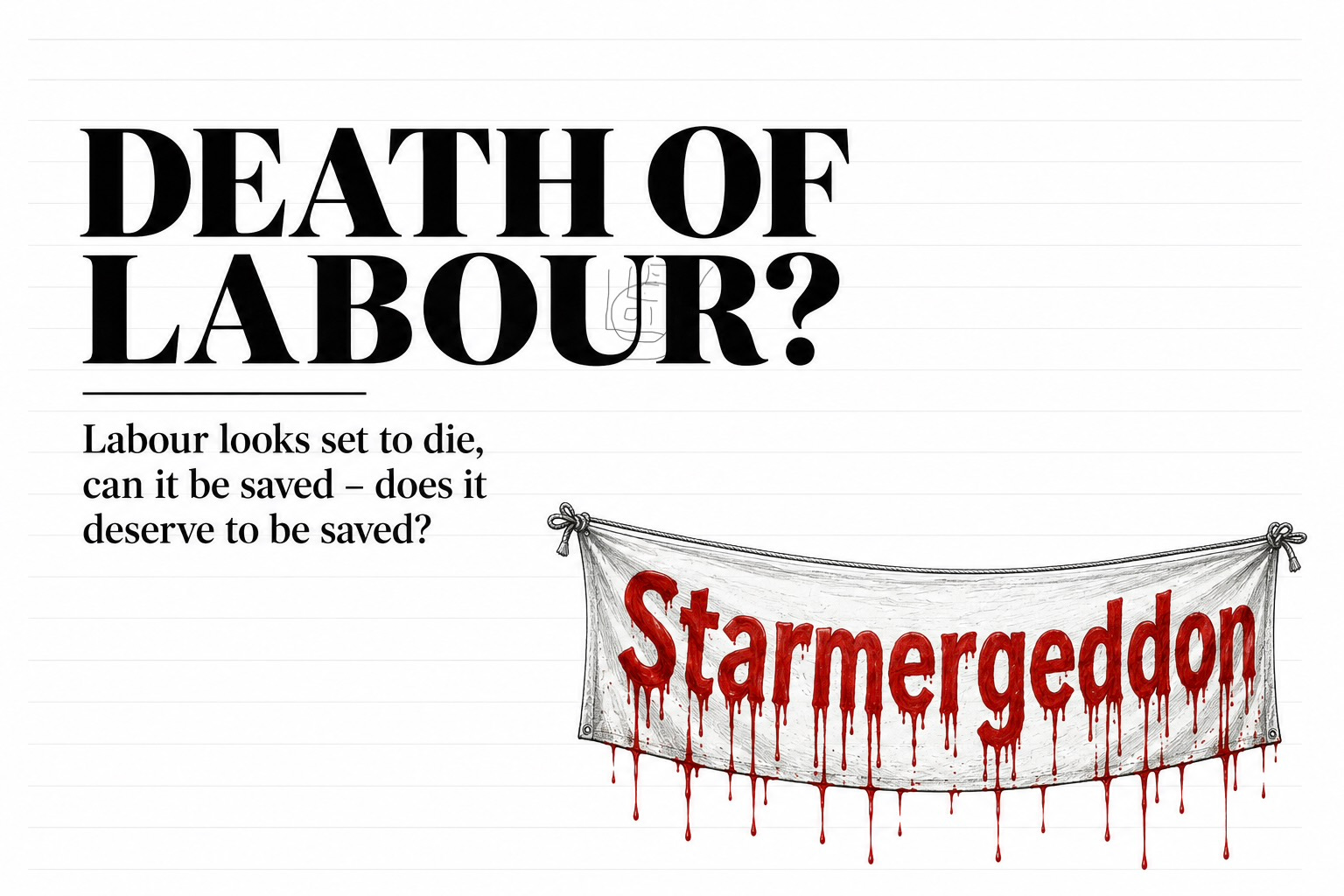
By the time most people in Birmingham wake this morning, Britain still will not properly know what it has voted for.
Not because the ballots are missing. Not because the public failed to turn out. But because modern Britain increasingly seems incapable of acting with urgency even during its own democratic rituals.
Once upon a time election night mattered. The count began almost as soon as the polls closed. Ballot boxes arrived under escort. Candidates, agents, councillors, volunteers and exhausted officials stood shoulder to shoulder into the small hours while local radio and television carried the atmosphere directly into people’s homes. Politics felt alive.
When I was a councillor, voting closed at nine o’clock and the counting began almost immediately afterwards. By quarter past ten the result would often already be known and I would be on the telephone to Ed Doolan at BBC WM discussing the night’s events live on air. Birmingham people went to bed knowing who had won, hearing the arguments, the triumphs, the disappointments and the first interpretations while the city was still awake. Democracy moved quickly because everybody involved understood something important: elections mattered enough to lose sleep over.
Now much of the country simply goes home to bed.
Across England, roughly 5,000 council seats are being contested, yet only around 1,200 are expected to declare overnight. Birmingham waits until later today. Sandwell waits. Solihull waits. Wolverhampton waits. The public has spoken but the machinery of the state prefers a more comfortable hour before it listens. Officialdom has its reasons. Staffing pressures. Health and safety. Fatigue. Costs. Risk assessments. Postal vote verification. Endless process. And yet somewhere along the line politics lost its pulse.
There was a time when politicians would simply have said: count the votes. Democracy is important enough to justify the overtime bill. Instead, many councillors now appear content to nod along while officers explain why things cannot be done quickly, energetically or boldly. It sounds like a small issue on the surface, merely the timing of election counts, but it reflects something much larger about the culture that has quietly consumed parts of modern Labour politics, particularly in local government.
The old Labour movement was often chaotic, tribal, argumentative and bruising, but it possessed force. It possessed urgency. It believed politics was something alive. In too many places that spirit has now been replaced by managerial caution and administrative drift. Meetings. Reports. Consultations. Equality impact assessments. Working groups. Layers of process piled upon layers of process until nobody quite remembers where the original purpose went.
And into that vacuum marches Reform UK.
Much of Westminster still misunderstands Reform’s rise because it insists on treating the party purely as a policy platform. But Reform’s appeal is not simply ideological. It is emotional. Reform sounds like it wants to do things. Whether one agrees with Nigel Farage or not is almost secondary. Voters increasingly respond to energy itself. Decisiveness. Impatience. The visible rejection of bureaucratic mush. While Labour often sounds like it is managing decline, Reform sounds like it is prepared to kick the furniture over. That matters politically.
The early declarations overnight suggest Reform is not merely hurting the Conservatives. In some traditional Labour areas the party appears to be drawing support directly from disillusioned working-class voters who once formed the emotional backbone of Labourism itself. And these are not minor tremors. Labour has already lost control of Tameside, a council it dominated for decades. Hartlepool has seen Reform sweep all contested seats overnight. Tamworth has slipped into no overall control following Reform gains. Stockport has gone Liberal Democrat. Salford, one of Labour’s symbolic urban strongholds, has reportedly experienced a severe Reform surge. The political map is beginning to fracture.
And while Birmingham has not yet declared, the direction of travel now looks increasingly difficult to ignore.
For generations Birmingham has functioned as one of Labour’s great municipal fortresses, even during periods of national decline. Yet the mood now moving through parts of the city feels markedly different. Exhaustion. Frustration. Disconnection. A growing belief that the city is being managed rather than led. If the trends emerging elsewhere across England continue into Birmingham’s delayed count later today, it becomes entirely possible that Britain’s second city may no longer be comfortably Labour-controlled in the years ahead. That possibility alone would once have sounded absurd. Now it feels plausible.
The mood inside Labour circles already feels febrile. Even before most declarations have arrived, the briefing wars have begun. Wes Streeting’s allies are reportedly preparing for possible leadership manoeuvres. Angela Rayner is said to be weighing her own position. Andy Burnham continues to hover at the edge of Westminster speculation. Meanwhile Keir Starmer signals he has no intention of leaving regardless of the scale of the losses. The most revealing document of the entire election may not actually be a result sheet but the extraordinary mood music emerging from Labour’s own loyalist publications. The language resembles less a confident governing party than a movement nervously waiting outside a consultant’s office for difficult test results.
The phrase “Starmergeddon” began half as a joke. It no longer feels entirely comic.
And here in Birmingham the implications matter enormously. Birmingham has become a laboratory for precisely the kind of politics now being rejected across parts of the country. Endless managerialism. Financial collapse explained through PowerPoint presentations. Basic services deteriorating while residents are asked to admire consultation frameworks. Equal pay disasters. Waste collection chaos. Rising council tax paired with declining civic confidence. People eventually stop believing that those running institutions understand the scale of decline around them.
That does not automatically mean Reform possesses workable answers to Birmingham’s enormous structural problems. It almost certainly does not, at least not yet. But voters increasingly reward parties that appear emotionally awake. The Greens may still advance in some pockets. Liberal Democrats may continue to gain selectively in suburban territory. Independents may yet flourish, especially where councillors visibly work hard for their communities rather than functioning as interchangeable party operatives.
In Birmingham especially, independents could become increasingly important over time. Local trust still matters. Visibility still matters. Effort still matters. Residents will forgive a great many ideological sins if they believe somebody is genuinely fighting their corner. That may become one of the defining lessons of this political moment. Not left versus right. Not even Labour versus Reform. But vitality versus exhaustion.
And perhaps that is why this election already feels different even before most of the counting has fully begun. The atmosphere itself has changed. Britain feels politically restless in a way it has not for many years.
I voted Labour myself.
But standing in the polling booth, pen in hand, I briefly felt tempted to write beside the cross: “Last chance.”
I did not do it.
But the thought was there.
And judging by the tremors moving through British politics this morning, I may not have been alone.
Maybe the answer to the Democratic deficit that is Birmingham and much of the nation lies in splitting up the city… there can be no unity when, as I pointed out yesterday, parts of the City are. In enmity with the rest, as reflected in last year’s riots. The northern suburbs south of Sutton belong with Sutton in a separate borough. The city centre and the inner area should be another borough and in the south two further boroughs, one based on Kings Norton and the other on the part of Birmingham originally in Worcestershire, centred in Yardley. The change would reflect that of Manchester. Few people realise that Manchester is only 1/3 rd the size and population of Birmingham. Many think of it as the second City. The city centre has two other metropolitan boroughs touching it … Trafford and Salford. That works a lot better than Birmingham. Old Trafford is not in the City of Manchester but in Trafford. Nor is the BBC, which is in the City of Salford. Few realise that. This change would make the inner city wake up to the fact that that it must make money or die. It cannot rely on the wealth of the suburbs or government bailouts. Nor can it rely on erecting skyscrapers for students and not for the indigenous population.