


Let’s not dress this up.
The electric car revolution is happening.
I know because I’ve been driving it for the best part of a decade.
But revolutions fail when politicians confuse ambition with engineering.
And right now, Britain risks doing exactly that.
More than ten years ago, over coffee in Birmingham city centre, Professor David Bailey told me he’d plugged his electric car into one of those early public chargers.
I asked how much range he’d gain while we sat there.
“Four or five miles.”
I almost laughed.
Four or five miles? That barely gets you from Edgbaston to Erdington.
But here’s what you only understand once you drive electric.
Four or five miles isn’t trivial. It’s breathing space. It’s flexibility. It’s anxiety removed while you’re drinking a flat white.
That quiet practicality nudged me into the electric age.
And I’ve never looked back.
I love the calm. I love the lack of noise. I love the absence of mechanical tantrums. Driving electric feels almost like steering a dodgem, except safer, smoother and strangely more civilised.
The quiet changes you.
So when I argue the EV transition needs recalibrating, not retreating, this is not coming from a sceptic.
It’s coming from a believer.
Bailey’s Core Warning
Professor Bailey has set out two clear arguments in recent blogs.
First, the Zero Emission Vehicle mandate is pushing supply faster than demand is ready to follow. Manufacturers must sell rising percentages of EVs or face fines. The target climbs steeply towards 80 per cent by 2030.
That looks muscular.
It also assumes families in Dudley, Derby and Dudley Port will move at the same speed as the regulation.
They won’t.
Carmakers can produce electric vehicles. They cannot compel buyers. They cannot instantly fix patchy charging networks. They cannot stabilise second-hand values by decree.
When supply outruns demand, markets warp. Discounting deepens. Residual values wobble. Finance gets cautious. Private buyers hesitate.
Bailey’s second point is political.
The 2030 ban on new pure petrol and diesel cars has become symbolic. A cliff edge. A virtue signal.
He argues for shifting the effective end-point to 2035. Not to weaken Net Zero. To make it stick. Use the next five years to fix infrastructure, mature the used market and align ambition with delivery.
That is not climate denial.
That is industrial realism.
The Midlands Has Skin In This Game
Now here’s the bit Westminster must not ignore.
The West Midlands is not a spectator.
We are the engine room.
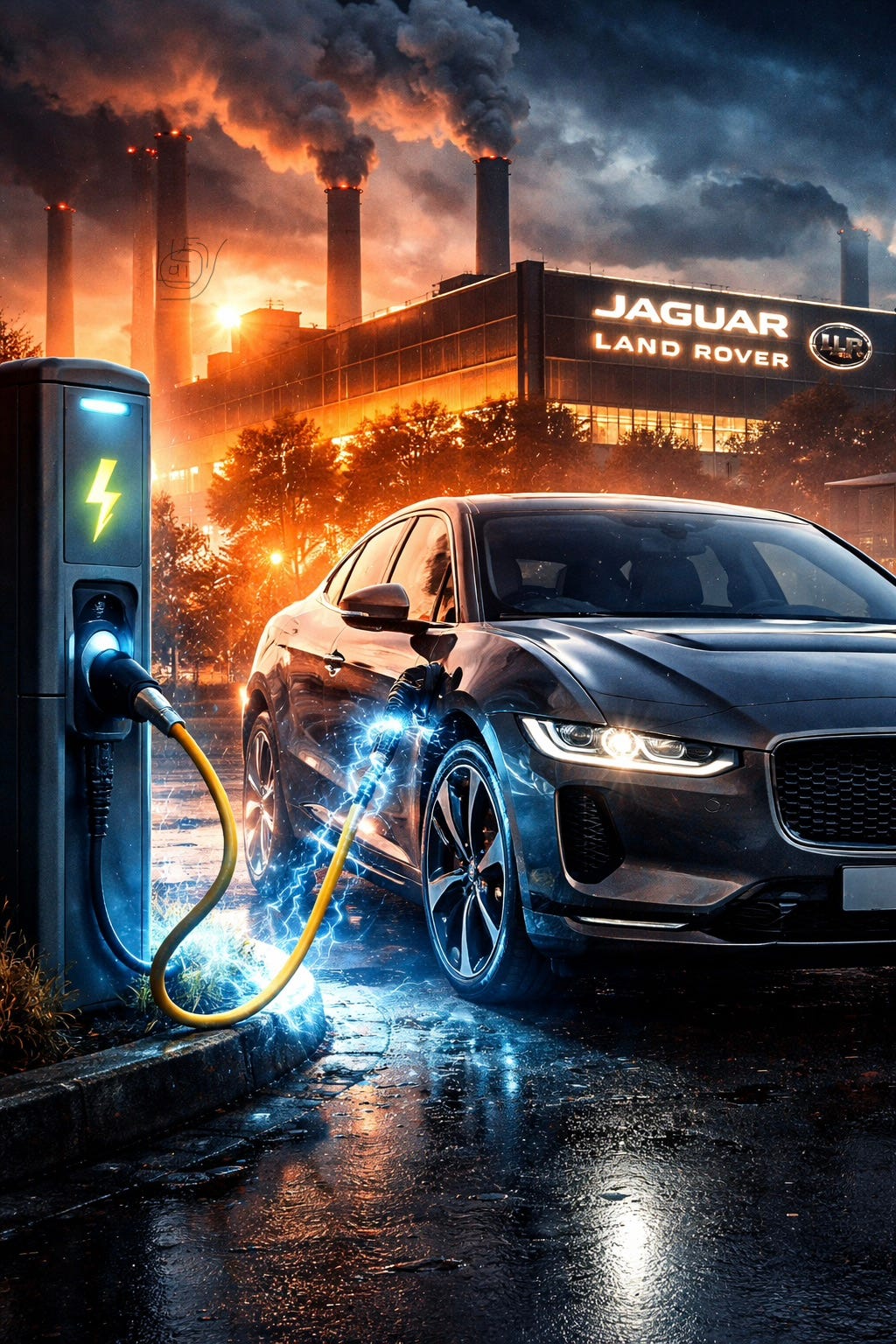
Jaguar Land Rover is retooling Solihull for electric Range Rovers. Wolverhampton’s Electric Propulsion Manufacturing Centre is central to future EV drivetrains. Hams Hall near Birmingham is assembling batteries. The regional supply chain stretches across Coventry, the Black Country and beyond.
This is tens of thousands of Midlands jobs.
And here’s the reality check.
The West Midlands has recorded well over half a million plug-in registrations since 2009. Birmingham leads the region. Uptake is growing year on year.
But EVs still represent a relatively small slice of total vehicles on our roads.
Growth? Yes.
Mass adoption? Not yet.
That gap is where policy risk lives.
If the mandate becomes a compliance squeeze instead of a confident transition, it is Midlands investment that takes the hit first.
This is not an abstract culture war here.
It’s apprenticeships in Solihull.
Shift patterns in Wolverhampton.
Supply contracts in Coventry.
Bailey understands that because he studies this ecosystem for a living. He knows industrial transitions succeed when sequencing is right.
And he also knew, all those years ago, that four or five miles mattered.
Transitions are incremental.
Policy should be too.
The Olley Reality
Here’s my bit.
Electric works. The technology is sound. The experience is better than most critics imagine. Quieter cities will be better cities.
But you cannot regulate psychology.
Private buyers remain cautious. Public charging outside London is inconsistent. VAT on public charging is higher than home electricity. The used EV market is still maturing. Insurance is rising.
None of this spells failure.
It spells friction.
And friction ignored becomes backlash.
Fix It Before It Fractures
So here’s the grown-up version.
Make 2035 the firm and credible end-date.
Spend the next five years fixing charging reliability nationwide.
Standardise battery health certification.
Stabilise tax policy.
Align supply targets with demand support.
Stop treating 2030 like a test of moral fibre.
Climate policy survives when it feels practical, not imposed.
GRIT Closing Shot
The electric future is coming.
But here in the Midlands, where we actually make things, we know this:
Deadlines don’t build industries.
Confidence does.
Infrastructure does.
Credibility does.
If Whitehall gets the sequencing wrong, it won’t be the headlines that suffer first.
It will be factory floors.
And this region has already rebuilt itself too many times to watch another industrial pivot stumble because somebody mistook a calendar date for an engineering plan.
The EV revolution should glide.
It should not grind.
And if Britain wants this transition to last, it needs Midlands realism as much as metropolitan ambition.