

Lee Marsham Steps Away, The Councillor Who Understood What Actually Matters
From damp-ridden homes to planning battles, Nechells loses a sharp, grounded voice who knew local politics is not about noise, but outcomes.

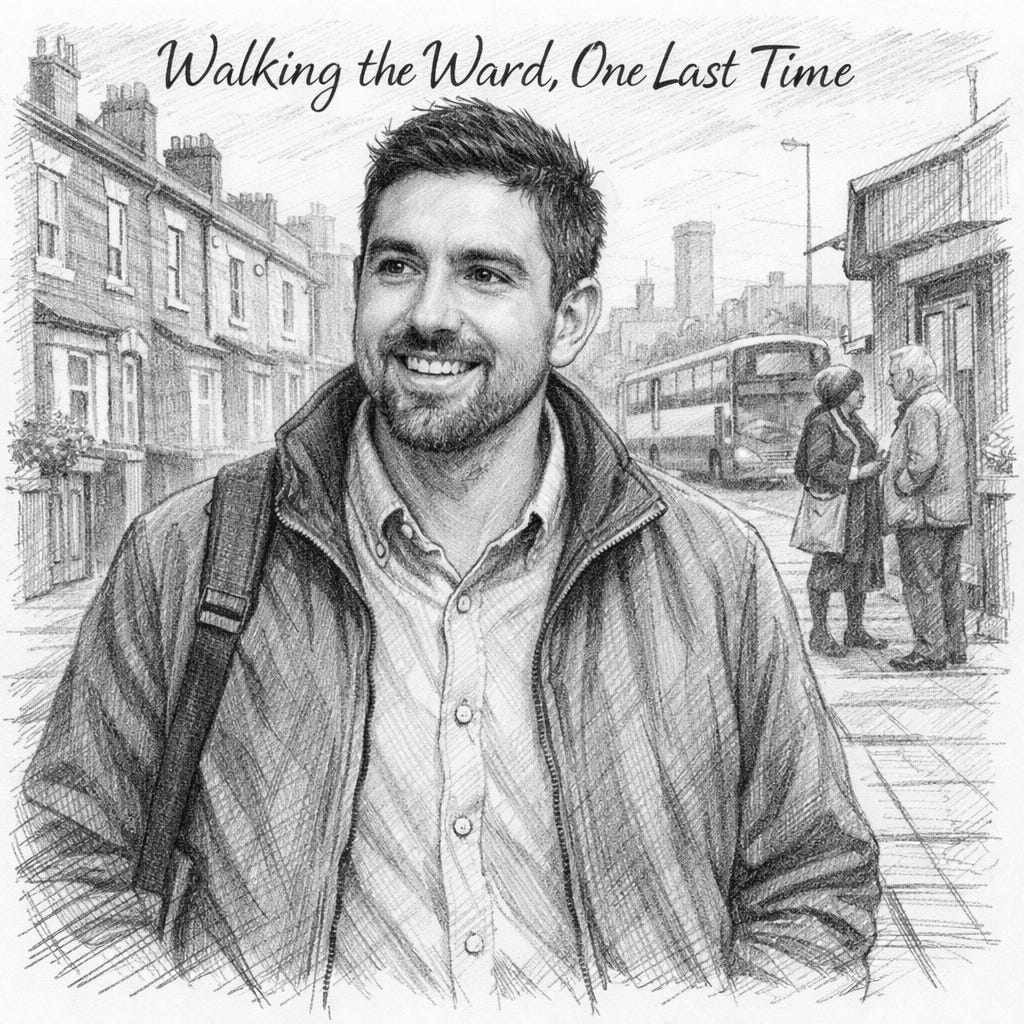
There is a particular kind of politician who never quite fits the mould the public expects. Not loud enough for Westminster theatrics, not cynical enough for the backroom game, and too grounded to forget why they turned up in the first place.
Councillor Lee Marsham sits firmly in that category.
We met in the afternoon, after he had been out campaigning in Nechells, the ward he has represented since 2022 and now, quietly, is preparing to leave behind. No fuss. No grandstanding. Just a decision that feels, in his words and in his manner, both heavy and entirely settled.
There is something faintly unfashionable about that these days.
From Kingstanding to the Council Chamber
Marsham’s story is not one of parachuted politics. It begins in Kingstanding, Birmingham, the sort of place that produces people who understand instinctively what local government actually means. Not theory, not ideology, but lived reality.
He was educated at King Edward’s before heading to university in Leicester. Not De Montfort, as is often assumed, but Leicester proper. The choice, he admits with a grin, had less to do with academic branding and more to do with geography.
“It was handy for getting back,” he says, “especially for the Villa.”
A lifelong Aston Villa supporter and season ticket holder, football was not just a pastime. It was a tether. A way of staying rooted while everything else moved forward.
Politics came early, but not absurdly early. In his teens, Marsham found himself drawn into Labour activism, inspired by a Birmingham mayoral campaign that clearly struck something deeper than passing curiosity. While others were still deciding what interested them, he was already watching how power worked.
And more importantly, how it affected people.
Apprenticeship in Real Politics
Before he ever became a councillor, Marsham had already seen politics at a level many never reach.
He worked for Sion Simon in Brussels, gaining exposure to the machinery of European politics at a time when the UK was still embedded within it. He also worked for Khalid Mahmood in Birmingham and London, learning the rhythms of constituency work and the pressures that come with representing real communities.
It is an apprenticeship that shows.
There is a fluency in how he speaks about policy and people, but without the rehearsed detachment that often comes with it. He understands both the macro and the micro, and crucially, where they collide.
He has worked at a high level on major national projects, including HS2 and the Commonwealth Games, and now operates in external affairs. That trajectory alone would be enough to define a career.
But he chose, in 2022, to step into local government.
A Fast Rise, and a Quiet Authority
It did not take long for Marsham to make his mark.
He rose quickly to become a scrutiny chair, a role that demands attention to detail, patience, and a willingness to challenge without theatrics. It is not glamorous work. It is often invisible. But it is where much of the real accountability in local government actually happens.
And here, experience speaks.
As someone who has sat in that same chair, you know it better than most. Scrutiny lacks glamour, certainly, but in the right hands it delivers a gentle but fatal punch. It exposes weakness, tests evidence, and, when done properly, forces decisions into the open where they cannot hide.
Many sit in scrutiny. Fewer understand it.
Lee Marsham did.
More notably, he became chair of planning, a position that sits at the intersection of politics, economics, and community tension.
By January 2025, he had gained national attention for persuading a local company to invest heavily in modern production methods. It was not an easy sell. There was resistance. There always is when change threatens established ways of doing things.
But the outcome spoke for itself.
What began as a contested proposal became, in time, something that others embraced. That is the difference between managing decisions and shaping them.
The Work That Matters
And yet, when asked about his proudest achievement, Marsham does not mention planning, or scrutiny, or national recognition.
He talks about a mother. Four children. A council property.
Damp. Mould. The kind of conditions that are too often discussed in reports but rarely confronted with urgency. The woman was coughing up blood. The children were unwell, struggling with asthma.
This was not policy. This was reality.
It took six months. Six months of persistence, pressure, and refusal to accept delay as an answer. Eventually, the family was moved.
“That,” he says simply, “is what matters.”
It is a reminder, if one is needed, that local government at its best is not about strategy documents or committee papers. It is about whether someone sleeps in a dry, safe home.
Alongside that, he points to something smaller but no less telling. A mile walking track in a local park. Not headline-grabbing. Not politically charged.
But used. Valued. Real.
Walking the Ward
One detail stands out in how Marsham approaches his role.
He does not drive.
He holds a licence, but chooses not to own a car. Instead, he uses buses and walks. It is not a performative choice. It is practical. It is how he moves through his ward.
And it changes perspective.
When you walk, you see the potholes. You notice the graffiti. You feel the gaps in services, not as abstract failures, but as daily irritations that shape how people live.
“Resident politics,” he says, “is not what people see on the news.”
It is a point that lands.
National politics dominates headlines, but it is local issues that define everyday experience. A missed bin collection, a broken pavement, unsafe housing. These are not ideological debates. They are lived frustrations.
Marsham understands that.
Why Step Down?
So why leave?
The answer, like much about him, is straightforward.
Work. Family. Balance.
He operates at a high level professionally, and the demands of that career, combined with the responsibilities of being a councillor, have reached a point where something has to give.
He has chosen to step back.
Not because he has fallen out of love with the role. Quite the opposite.
“I’ve loved it,” he says. And you believe him.
There is sadness in the decision, but not regret. That distinction matters. It speaks to someone who knows when to step away, rather than being pushed.
And at a relatively young age in political terms, he leaves the door open.
This is not an ending. It is an intermission.
Labour, the Polls, and Perspective
No conversation with a Labour councillor in 2026 can avoid the broader question.
The party’s polling. The public mood. The sense of dissatisfaction that hangs in the air.
Marsham is candid.
This, he notes, is the first Labour government he has been able to vote for in his adult life. That alone carries weight.
He understands the frustration. He does not dismiss it. But he frames it within a wider context.
“A week is a long time in politics,” he says, before pausing. “Now it might be 24 hours.”
Social media has compressed the political cycle to the point where narratives rise and fall almost instantly. What would once have taken months now unfolds in days, sometimes hours.
And that volatility cuts both ways.
He draws comfort from international examples, particularly Canada, where political fortunes have shifted dramatically in short periods. Parties written off as finished have found their way back.
For Marsham, the foundation matters more than the moment.
He believes Labour has laid the groundwork. Whether that translates into recovery remains to be seen, but his view is not shaped by panic.
It is shaped by perspective.
What He Will Miss
Ask him what he will miss most, and the answer is immediate.
People.
Not the abstract notion of “the public,” but actual residents. Conversations on doorsteps. The small, repeated interactions that build trust over time.
There is a tendency to view politics through a national lens, as if everything flows from Westminster. But Marsham’s experience points in the opposite direction.
Real politics, the kind that affects how people live day to day, happens locally.
And that is what he will miss.
A Different Kind of Departure
There is no scandal here. No dramatic fallout. No forced exit.
Just a councillor stepping down because he has decided it is time.
In an era where politics often feels performative, that carries a certain weight.
Marsham leaves having made a mark. Not in the way that generates headlines, but in the way that changes outcomes.
A family rehoused. A park improved. A business persuaded to invest. A ward represented with consistency and attention.
It is not the stuff of grand narratives.
But it is the substance of public service.
The Door Remains Open
If there is a final note to strike, it is this.
Lee Marsham is not finished with politics.
He is stepping away, not stepping out.
Young enough to return, experienced enough to matter, and grounded enough to remember why he started, he remains a figure to watch.
For now, Nechells loses a councillor who understood that politics is not about being seen.
It is about being useful.
And in that, quietly and without fuss, he has been exactly that.