


Labour has always had a complicated relationship with the House of Lords. It is a chamber that many members, including Keir Starmer when he was Leader of the Opposition, have often said they want to see abolished. They have howled about reform for decades. They have promised an elected second chamber. They have sworn blind that this relic of a previous age would not last forever. Yet here we are. The old place remains in position. Imperfect but playing an important role in our democracy. Too difficult to remove. Too useful to ignore.
As long as it exists, it is right that it should represent the country better than it has in years gone by. Labour, now in government, has been increasingly frustrated by the Lords blocking legislation it was elected to deliver. You can feel the irritation in the corridors. It is in this context that the Prime Minister has announced thirty four new political peerages. Twenty five of them are Labour appointments, joined by five Liberal Democrats, three Conservatives and a lone crossbencher. It is the Labour contingent that stands out. Not simply for its size but for the shape of it. A fresh intake that will march into the red benches next year and, perhaps, give the government some momentum.
Under Tony Blair, all but ninety two hereditary peers were removed. This was supposed to be the first step towards further reform and eventually towards something that looked like an elected chamber. The trouble with Parliament then and now is its ability to tell you very loudly what it does not want while studiously failing to unite behind what it does. Everyone wants reform in principle. No one can agree on the shape of it. That is what killed Blair’s next stage of Lords reform. Every option from a fully appointed house to a fully elected one collapsed under the weight of its own lack of consensus.
Public perception of the Lords is frequently at odds with how peers see themselves. This is hardly unusual for politicians or parliamentarians. Every time new appointments are announced, the word cronyism gets thrown around like confetti at a gangster’s wedding. And every peer you meet will tell you, usually within the first five minutes, that they are fiercely independent. Not lobby fodder. Not part of any neat little faction. They all like to think of themselves as the one person in the chamber who has not been captured by the system.
Readers who believe these new appointments will be unthinking loyalists of the Starmer project should look up the term Starmtroopers.*
One thing that does jump out from this year’s list is the wealth of local government experience on display. Former leaders of Southwark and Newcastle. The current Mayor of Lewisham. A London Assembly member. A cast of current and former councillors. A former Local Government Association Labour Group staffer who is also a councillor. These people know the machinery of local service delivery. They understand the rat runs of council finance. They have stared austerity in the face and been told to deliver more with less and still smile for the cameras.
As the government continues to build out the metro mayor system and as legislation from the Renters Rights Act to the Child Poverty Strategy piles new responsibilities onto councils, having more people who know how local government actually functions is a strength. The Lords will need people who can spot the gaps, the loopholes and the practical failures before they emerge on the ground. This is serious experience at a time when serious experience is required.
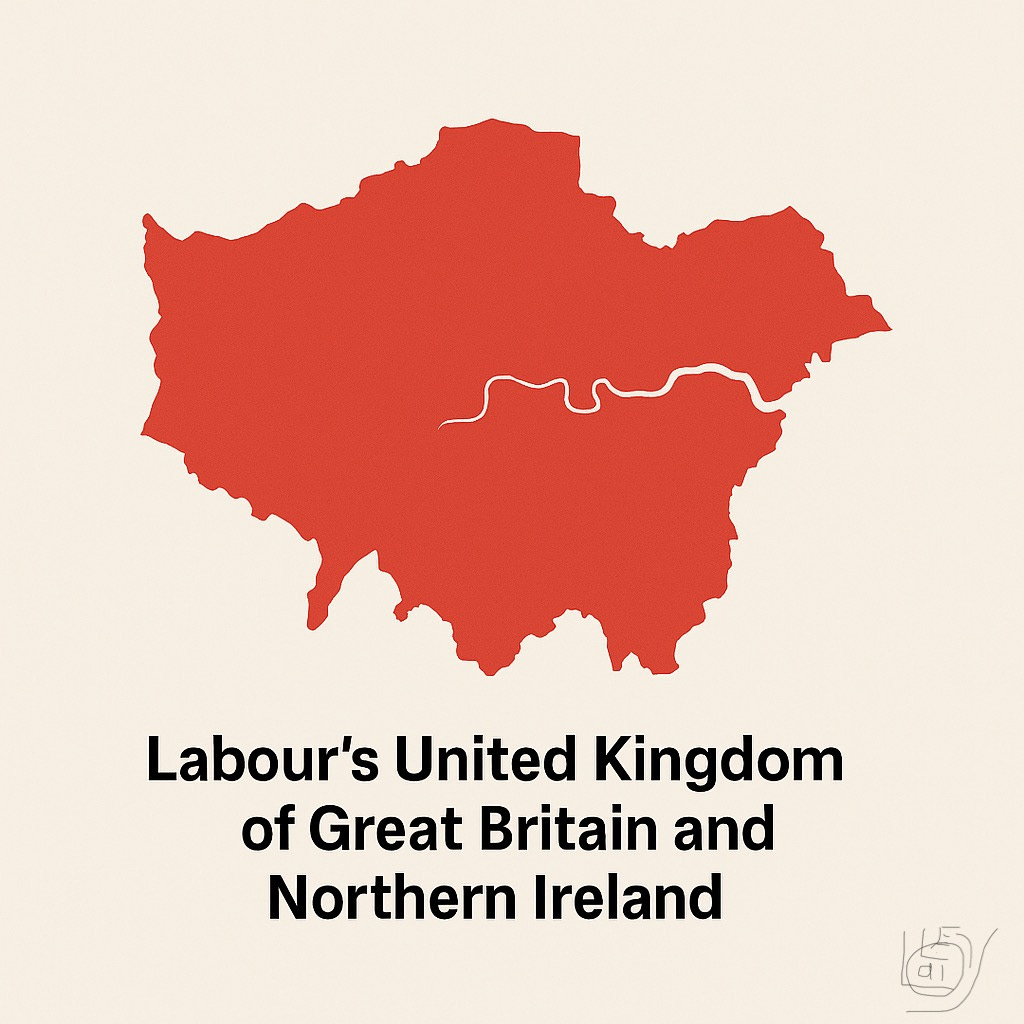
But when you look more closely at Labour’s twenty five new peers, the real shocker emerges. The overwhelming majority are London centric. They are creatures of the capital and its orbit, steeped in Westminster culture, Home Counties institutions and London government machinery. You could be forgiven for thinking that none of them has spent any meaningful time north of Watford Gap. Most would struggle to place Wednesbury on a map or tell you where Lower Gornal sits. Which is ironic, given that the famous idea of “Wednesbury reasonableness” in public law was developed from a case about a Midlands local authority. A very poor lawyer’s joke, I accept, but it makes the point. The political and legal imagination still runs out somewhere along the M25.
For all the talk of diversity, the one kind Labour still cannot grasp is geographic diversity. And let us be honest here. This is not half the nation being ignored. It is a damn sight more than half. It is most of the country. It is almost everywhere that is not within the gravitational pull of London. It is a disgrace. Not because Londoners are unworthy but because a party that claims to speak for the whole nation has once again shown that when it has real power to choose, it forgets the nation it claims to serve.
And here is the kicker. Diversity by region is not some radical new idea that has suddenly appeared in Labour’s peripheral vision. It is something that may well be out of the modern rulebook but was certainly in it for years. A principle the party once claimed to take seriously. A recognition that Britain is not a single metropolitan blob but a nation of regions, identities and economic realities that cannot be understood from a Zone 1 meeting room. Labour used to insist that its structures, its candidates and its appointments reflected that regional breadth. Somewhere along the way it simply stopped bothering.
It is not ignorance. It is neglect. Long term. Systemic. Convenient. When the party finally had the chance to appoint a slate of new peers, it ignored its own traditions and fell back into the warm, familiar comfort of the London set. A party that once prided itself on regional balance now treats it as an optional extra.
And this, apparently, is Labour’s best shot at renewing the Lords. This is the moment when a progressive, socialist party, flush with a landslide and promising to rebuild the country, gets to show what an equitable, balanced, nationally reflective second chamber might look like. Instead we get a list that practically smells of the Jubilee line.
Let us look ahead. What happens if Reform sweeps three hundred plus seats at some point in the future. What happens if Nigel Farage becomes Prime Minister. Almost all of the House of Lords would be non Reform. Is that good for democracy?
Farage has already pushed the question. He has demanded that Reform be allowed to nominate peers, complaining of a “democratic disparity” and arguing that a party with millions of votes, MPs and growing national support cannot be locked out of the second chamber while smaller parties enjoy representation. The same Farage has previously called for the Lords to be abolished altogether, describing it as an outdated, undemocratic institution. Both positions cannot stand forever. At some point he must decide whether he wants a seat at the table or wants to burn the table down.
Could this tension be the moment that finally forces proper reform. It might be. If Reform ever does become the largest party in the Commons, the Lords would remain overwhelmingly packed with Labour, Conservative, Liberal Democrat and crossbench peers. A government claiming a popular mandate would be facing an unelected chamber that barely reflects its existence. That is a constitutional car crash waiting to happen.
The only honest way through would be a serious programme of Lords reform in any Reform manifesto, not just another howl about elites. If they go to the country promising real structural change, the Lords could not claim a democratic mandate to block it. If they do not, the Lords would likely dig in its heels. The bizarre result would be this. The unelected House of Lords, which everyone calls undemocratic, could find itself defending democratic principle by saying, “You did not ask the people first.”
Labour’s own manifesto already talks about replacing the Lords with a more representative chamber. Reform could steal that ground and go further, promising a directly elected Senate of the Nations and Regions. Suddenly, we might have the first serious cross party impetus for change since Blair’s early years.
I say all this as someone who counts Lord Roy Kennedy as a friend. A Londoner, by the way, and a damn decent bloke for it. Possibly the nicest Millwall fan ever to grace a post code. He works. He grafts. He does the job. The problem is that many peers do not. They enjoy the title, the grandeur, the stately weight of it all. They enjoy being a Lord more than doing the work of a Lord. People like Roy are far too rare.
If any Prime Minister wants the Lords to work, they will need more people like him. People who graft. People who know procedure. People who understand the Commons linkages and the legislative gears. It is not an easy job. It is a daunting job. And any Prime Minister imagining they can simply bulldoze their way through will discover fairly quickly that the Lords has a longer memory than they do.
So here we are. A new wave of peers. A chamber still unreformed. A system still skewed towards London. A democracy still wrestling with its own architecture. The Lords survives because every party needs it for something and no party has the courage to remake it. It limps on. Stately. Grand. Frustrating. Necessary.
And if Britain keeps pretending that national balance can be delivered by appointing London insiders with only a faint idea of where the Midlands begins and ends, then the problem is not the Lords. The problem is us.
* Term “Starmtroopers” referenced via reporting and commentary on LabourList.
I'm afraid that it applies to all the nominations!
You mention "Wednesbury reasonablness". It refers to Wednesbury Council who refused ABC Cinema to show a film on Sunday, the Courts ruled that was unresonable.