


Tony Iommi wrote, or perhaps more accurately composed, Paranoid in 1968.
He is a founding member of Black Sabbath, the band’s lead guitarist, the writer of most of their music, and a man who is still shaping sound more than half a century later. He is also a quiet, courteous, unmistakably Brummie man, never loud in person, never theatrical, never needing to convince anyone of anything. He simply builds.
To many, he is one of the greatest guitarists who ever lived. To others, the co-founder of one of the most successful bands in popular music history. To historians of culture, the inventor of heavy metal. All of this is true. None of it is sufficient.
Because what he did was not about genre. It was not about fashion. It was not about volume.
It was about structure.
Shirley Pictures
I first heard Paranoid when it was new. I did not hear it in a concert hall. Not on a quality stereo. Not through the careful hands of a record shop assistant.
I heard it in a cinema.
Shirley Pictures, on a Saturday morning. I must have been eight or nine years old. Comfy commercial seats, rows slightly worn by generations of restless children, carpets that smelled faintly of warm dust and cheap sweets. The kind of place built to fill time rather than shape it.
The cinema is gone now. A Morrisons stands on the site. Bright white lighting where there was once darkness that felt like anticipation. Shelves where there were once folds of sound.
But the moment has never left me.
I did not understand what I was hearing. I did not have the language for it. I did not have any cultural framework to interpret it.
All I knew was that it did not feel like music as I understood music.
It felt unstable. Like a machine breaking free. Like bolts shaking loose. Like a controlled environment suddenly losing control over what lived inside it.
There was a compère, as there often was in those days. A cheerful man who tried to manage children like weather. He brought several of us onto the stage, in fornt of the screen, what a treat. The music was played loud. We headbanged to the “music”. The compère, he joked that head-banging might cure dandruff. The room laughed.
I didn’t.
I felt something else entirely.
Not fear. Not excitement. Something like pressure. As if the sound was not trying to entertain but trying to move a wall.
When the Ear Changes
At that age, I was not alone. Most people didn’t understand it. The nation didn’t.
The music was labelled dangerous. Ugly. Corrupting. Something for troublemakers and teenage rebellion. Critics mocked it. Parents feared it. The radio allowed it through clenched teeth.
But that response is old. It repeats across history.
Societies do not recognise architecture when it is born. They call it chaos.
Years passed. That is what time does.
Life filled in. Work. Loss. Faith. Husbands and wives. Children. Graves. Pressure. Silence.
The boy in the cinema disappeared into the man at the wheel.
Decades moved.
And then one day, that same song arrived in my ears and it sounded different.
Not wild. Not chaotic. Not juvenile.
Precise.
Constructed.
Structured.
What I had once dismissed as noise now sounded like beams and load-bearing walls.
That is a difficult realisation when it occurs. You understand that nothing changed in the work. Only you changed.
That is humility in sound.
I sometimes play Paranoid and Sabbath, on the way to church now. It does not feel mischievous. It does not feel like rebellion. It does not feel ironic.
It feels honest.
It feels disciplined.
It feels as though it tells the truth in a way polite sounds often avoid.
Sometimes art does not move.
Time moves.
And the ear follows.
The World That Misunderstood It
We are trained, from childhood, to associate culture with polish. With institutions. With lecture halls. With stone steps worn by established feet. We are trained to think that cultural gravity lives in velvet, marble and ceremony.
History does not support that belief.
History says something much colder.
Almost all genuine innovation appears crude at birth. It frightens polite people. It sounds ugly. It looks like breakage rather than creation.
The establishment does not understand architecture in motion. It only understands decoration in retrospect.
Tony Iommi did not grow up in a pipeline to approval. There were no honours lists waiting for him. No polite nods from institutions. No formal scaffolding.
Just work.
No knighthood. No early recognition. No cultural certificates.
And that absence of approval is precisely why the work may last longer than those who sat in judgement.
Institutions tend to honour architects only when it becomes dangerous not to.
Birmingham, Metal, and Survival
There is no mystery behind the sound.
Birmingham was not a city that bred refinement. It was a city that bred endurance. Furnaces. Lathes. Presses. Foundries. Finishing shops. Shift work. Burnt hands.
This was a city that understood rhythm without needing a conductor.
Metal was not metaphor in Birmingham. It was daily life.
Tony Iommi was not born into salons or art schools. He was a factory worker. And in that factory, he lost the tips of his fingers in an accident that should have ended everything.
He was told, politely, that his musical days were over.
Most men would have bowed to that.
He did not.
He took a washing-up bottle and fashioned prosthetic fingertips. He altered the tension of the strings. He tuned down. He adapted the instrument so damaged fingers could continue to press steel.
That was not aesthetic thinking.
That was survival.
And in surviving, he invented.
Architecture of Sound
Before Iommi, heaviness in music was about performance. Volume. Aggression. Attitude.
After Iommi, heaviness had architecture.
Riffs were no longer surface. They were frame. They were girder. They were foundation.
Sound was no longer decoration. It became space.
You could walk inside it.
You could feel ceiling and wall.
Repetition became strength rather than monotony.
Darkness became discipline rather than decay.
Subscribe now
This was not a fashion. It was an unintended by-product of physical limitation and industrial discipline.
That is why it endures.
Who History Keeps
We get the word “composer” wrong because we reduce it to manners.
We think of powdered wigs and aristocratic rooms. We imagine refinement.
But that is not what makes a composer survive history.
Structure survives history.
Mozart was not celebrated easily.
Bach was nearly lost.
Beethoven died in silence.
Van Gogh died unknown.
Stravinsky provoked riots.
Genius is usually born in disorder.
But consider this.
The rulers they lived under are forgotten.
We do not memorise the names of kings from Bach’s lifetime. We do not chant the cabinets from Mozart’s era. We do not build statues to forgotten emperors of Beethoven’s world.
But their music survives.
This is not romance.
This is engineering.
Tony Iommi did not imitate a language.
He created one.
Film scoring now uses the logic he built. Video games. Industrial sound design. Dramatic television scoring. Advertising. Sacred modern music. Even contemporary classical composition lives inside a framework that did not exist before his work.
That is not performance.
That is infrastructure.
When the City Finally Spoke
Years after the small cinema disappeared, I stood in a different sort of room.
The Council House in Birmingham. A building that does not rush. High ceilings. Polished wood. Old stone. A place that believes in itself.
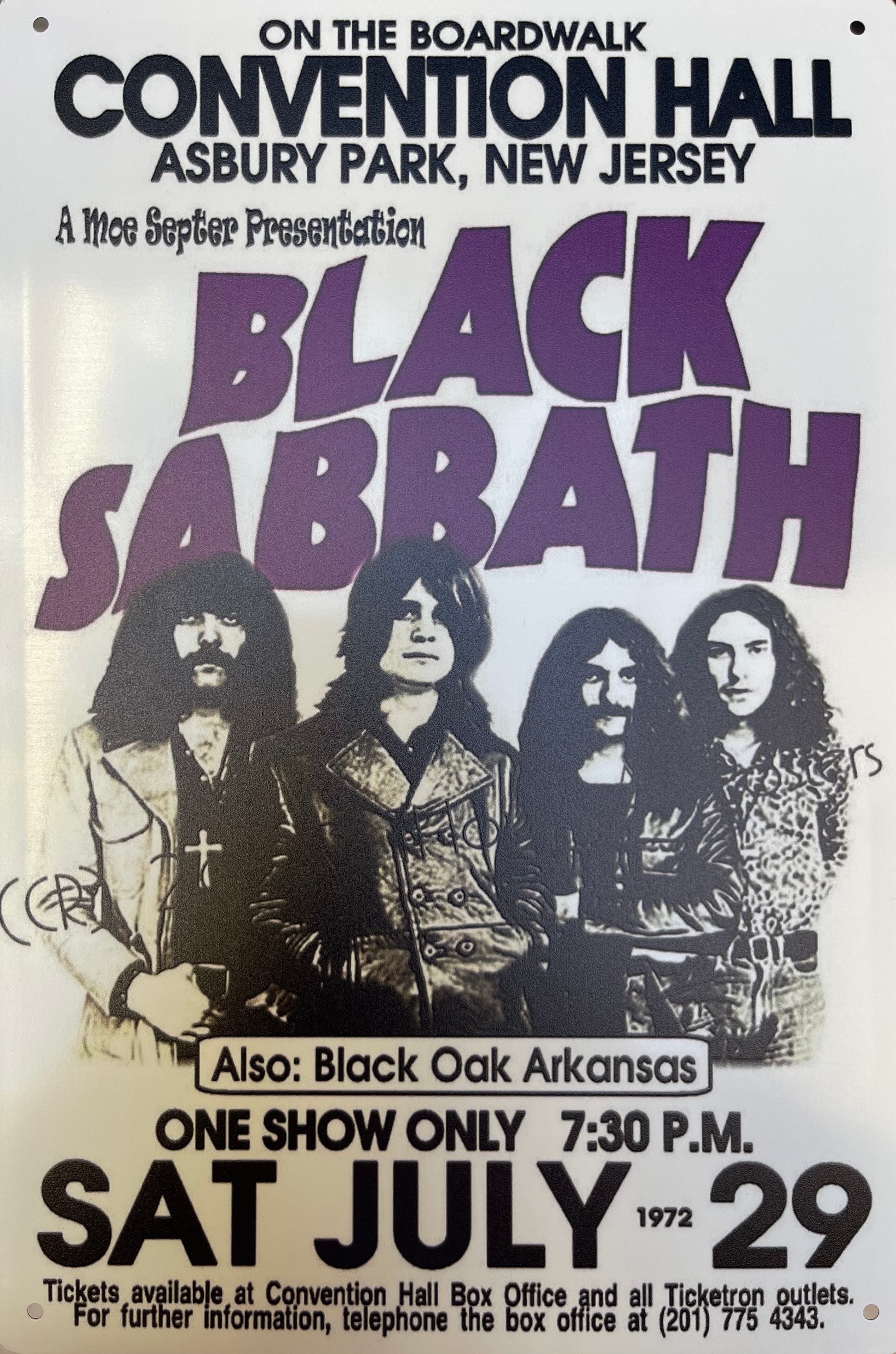
Black Sabbath band members were being granted the Freedom of the City.
It looks insignificant on paper. Ceremonial. Symbolic. A scroll and a signature.
But it was heavier than that.
Because the city was not celebrating fashion.
It was acknowledging structure.
The same men whose sound once unsettled a child now stood in a space designed to honour permanence.
There was no performance.
No theatre.
No movement.
Only presence.
Tony stood as he always does. Calm. Unshowy. Impossible to disturb.
And in one quiet moment, totally unstaged, he reached across and gently tugged Bill Ward’s ear.
Not for the crowd.
Not for history.
Just because he could.
That gesture mattered more than speeches.
Because monuments are built of stone.
Architecture is built by men.
In that silence, I thought of the cinema. The sugar smell. The sticky carpet. The faint echo of confusion and my head.
The sound had not moved.
The city had.
The Weight of Working People
That is how cultural gravity works.
It does not ask permission.
It does not seek validation.
It moves through phases.
First it is mocked.
Then it is tolerated.
Then it is copied.
Then it is finally honoured.
People misunderstand heavy music because they assume it is rebellion.
It is not.
Real heavy music is ritual.
It is endurance.
Factory work is not rebellion. It is discipline.
Metal, when honest, is industrial prayer.
It is repetition.
It is structure.
It is the sound of survival.
This is why heavy music belongs to working people.
Workers do not perform wealth.
They construct it.
Hands. Exhaustion. Continual motion. Sweat. Smarting knuckles. Cold air. Danger.
This music came from that world. From environments where error meant injury. Where repetition meant survival. Where darkness was not metaphor but electrical reality.
That gives it weight.
That gives it authority.
This is why metal does not feel out of place in a cathedral.
Because both understand ritual.
Years later, Tony Iommi worked with Birmingham Cathedral. Electric guitar and choir. Stone and sound. Distortion and sacred breath.
This was not provocation.
It was alignment.
Because both factory floor and sanctuary are built around repetition, endurance, sacrifice and patience.
The Legacy That Grows
So what is his legacy.
Not speed.
Not volume.
Not decibels.
Not rebellion.
Architecture.
He did not decorate sound.
He constructed it.
He gave heaviness a skeleton.
He gave darkness a roof.
He gave working experience a shape that no polite person could dismantle.
Now we arrive at the dangerous question.
Will he be remembered in a hundred years.
Possibly.
In two hundred.
Likely.
Will he outlive in memory the Lord Mayors of Birminghamham, Prime Ministers of the UK, perhaps even monarchs of his age.
That is not madness.
That is historical logic.
Because history does not commemorate office.
It preserves form.
We do not know the names of most rulers from Bach’s world.
We do not frame speeches from forgotten ministers.
We do not fill rooms with the faces of lost statesmen.
But we play Bach.
We hear Mozart.
We feel Beethoven.
The small boy in the cinema thought he was hearing chaos.
He was.
But only because new structure feels like disorder while it is was being built.
Tony Iommi did not produce noise.
He produced load-bearing sound.
He gave weight a form.
He gave darkness a plan.
He gave working people a voice that never needed permission.
That kind of work does not shrink.
It grows.
In one hundred years, his name will not be quieter.
It will be heavier.
In two hundred years, his influence will not fade.
It will be clearer.
Fashion erodes.
Architecture remains.
There are very few living Brummies, and very few living Englishmen, whose work carries that kind of structural gravity.
Tony Iommi is one of them.
Not for shock.
Not for rebellion.
But for building something permanent out of discipline, injury, metal and truth.
That is not fantasy.
That is exactly how history works.